

Chin Sculpting Gallery
$$MultiPurposeText$$
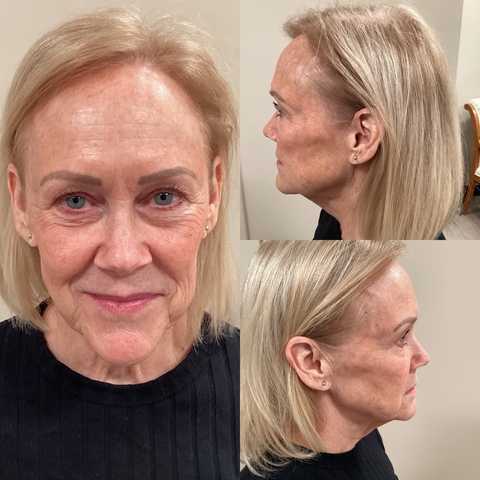
See examples of our Chin Sculpting work and results.


What Our Clients Say
$$MultiPurposeText$$
Read testimonials from our satisfied customers

I had a fantastic experience with Dr. Ronald Perlman and his wonderful team for nose fille...more

I’ve been going to Dr. Perlman for years. His office staff is always warm and so friendly....more

I was scared and hesitant, at 65 yrs old to proceed with surgery on my stomach and breast ...more

I went to Dr. Perlman with my particular facial concern which has bothered me and caused m...more

I visited Dr Perlman for a consultation to have a tummy tuck and breast augmentation in Ma...more

I am very happy with Dr. Perlman. He is so talented and also so good at making you feel c...more

Frequently Asked Questions
Get answers to common questions about Chin Sculpting.
Candidates typically have microgenia or a weak chin with healthy tissues and realistic goals. Dr. Perlman evaluates facial proportions, dental occlusion, and medical history during consultation to determine if anatomically correct implant augmentation is appropriate.
Initial swelling and bruising typically subside within one to two weeks. Most patients return to light activities in a week and resume normal exercise after three to four weeks, following Dr. Perlman's personalized postoperative instructions for optimal healing.
We use anatomically contoured, medical-grade silicone implants designed to match patient anatomy. These implants offer predictable shaping, biocompatibility, and long-term stability. Dr. Perlman selects size and contour based on facial analysis and aesthetic goals to achieve natural-looking augmentation.
When performed correctly, chin implants enhance profile without altering dental occlusion or smile mechanics. Dr. Perlman assesses jaw position and works carefully near oral structures to preserve function. Temporary numbness or tightness can occur but typically resolves.
Chin implants provide long-lasting results but are technically reversible — implants can be removed or exchanged if desired. Revisions may be needed for aesthetic adjustments or rare complications. Dr. Perlman discusses expectations, risks, and long-term care during consultation.
Surgery is performed under local anesthesia with sedation or general anesthesia. Incisions are usually hidden inside the mouth (intraoral) or beneath the chin for certain cases. Dr. Perlman creates a pocket, positions the implant precisely, and closes incisions for minimal visible scarring.